Every fall there’s a short window between the last warm afternoon and the first morning that drops below zero. In Minnesota, that window closes fast. A pole building that goes into winter with a worn door seal, an exposed water line, or a gap at the base trim usually lets you know about it in January, when the fix is harder and colder. An afternoon of checking things over now can save a frozen pipe, a mouse-chewed wire, or an overhead door that won’t close in a storm. Here’s a practical checklist to winterize your pole building, plus when it makes sense to call an experienced, local pole building contractor for the jobs that go beyond a walk-through.
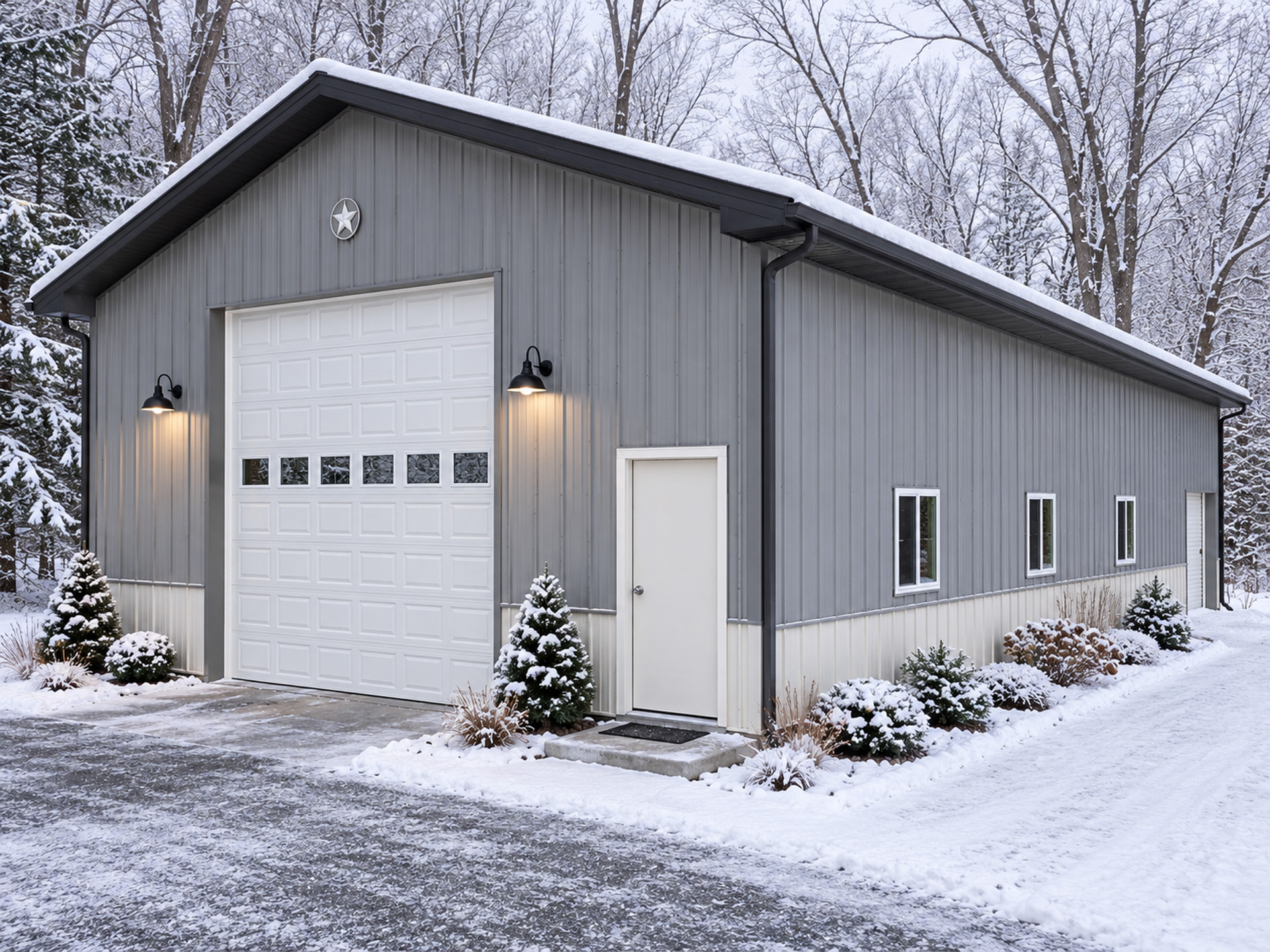
Winterizing a Minnesota pole building before the deep freeze helps you avoid:
- Frozen and burst water lines — One of the most expensive winter surprises in any building
- Drafts and heat loss — Worn door seals and gaps let cold air in and heating dollars out
- Rodent damage — Mice move indoors in the fall looking for warmth and nesting material
- Doors that stick or won’t seal — Ice, debris, and worn parts are hardest to deal with mid-storm
- Snow and ice damage — Clogged gutters, snow piled against walls, and blocked doorways
For Minnesota property owners, a little time in the fall protects the building and everything stored inside it through the toughest months of the year.
Experienced Minnesota Pole Building
Contractor
Most of a winterizing checklist is something an owner can handle in an afternoon. But some issues show up during a walk-through that call for more than weatherstripping, like a door that has shifted out of adjustment, insulation that never quite kept up, or a building that’s being heated now when it wasn’t built for it. An experienced pole building contractor brings:
- A trained eye on the building envelope — Spotting gaps, worn trim, and loose panels before winter finds them
- Door adjustments and upgrades — Seals, insulated doors, and replacement parts that fit
- Insulation and heating improvements — For buildings that are used differently than when they were built
- Engineered designs — Through an authorized Wick Buildings dealer
- References from past pole building projects — That prove reliability
The easiest building to winterize is one that was designed for Minnesota winters from the start. Wick Buildings has engineered custom structures for Upper Midwest snow loads, wind, and cold for more than 100 years, and as an employee-owned company, the people behind every building have a personal stake in how it holds up. Allan Dorney Construction partners with Wick because that commitment to quality matches our own. As an authorized Wick Buildings dealer, the team handles design, materials, and construction with one point of contact, and when a question comes up years later, you know exactly who to call.
Your Pre-Winter Walk-Through
Set aside an afternoon before the first hard freeze and work your way around the building, inside and out:
- Doors — Check bottom seals and weatherstripping on overhead and walk doors, clear sliding door tracks, and test openers and safety sensors
- Water lines — Drain or blow out lines in unheated buildings, check heat tape and insulation on exposed pipes, and confirm frost-free hydrants drain properly
- Heaters — Have heaters serviced, make sure vents are clear, and test carbon monoxide detectors in any building with fuel-burning heat
- Rodent-proofing — Look for gaps at the base trim and around doors and utility openings, and store feed, seed, and birdseed in sealed containers
- Roof, gutters, and trim — Clean out gutters and downspouts, and look for loose trim, panels, or fasteners after fall winds
- Snow plan — Know where snow slides off the roof, keep it away from doorways and walkways, and avoid piling plowed snow against the walls
- Drainage — Make sure the ground slopes away from the building so spring melt doesn’t pool at the base
If the walk-through turns up something bigger, like a door that won’t seal, persistent drafts, or a building that’s outgrown how it was built, fall is a good time to plan the fix, even if the work waits until spring. Custom pole buildings from Allan Dorney Construction are engineered for Minnesota snow loads and built to stand up to the deep freeze — by an experienced local contractor with the references and follow-through to back the work.